
Blog / Ford History

Blog

All Ford History El Paso Community Ford News Casa Ford Listicles El Paso Ford Service El Paso Ford Dealer El Paso Used Cars How To Guides
Motor car Ford Crown Victoria Police Interceptor of the NYPD in the city street.

Iconic Cars in Popular Video Games to Celebrate National Video Games Day

From early arcade racing games to modern open-world adventures, cars have been crucial in gaming. They symbolize speed, power, and nostalgia. Whether you're into cars or video games, this relationship is endlessly fascinating. Today, we’ll look at some iconic cars featured in popular games, like the VW Beetle, Ford Crown Victoria, Chevrolet Camaro Mark I, and Toyota Hilux. The Volkswagen Beetle Affectionately dubbed the "Bug," the Volkswagen Beetle holds the record for being the most featured car in video games, appearing 337 times. This cherished model has journeyed across numerous genres, from racing games to action-adventure titles. In the Need for Speed series, the Beetle is often customizable, allowing players to tailor it to their preferences. The Grand Theft Auto series frequently showcases the Beetle, whether parked on city streets or utilized in missions. Known for its realistic driving mechanics, Gran Turismo includes the Beetle as part of its extensive car catalog. In "The Last of Us," a post-apocalyptic adventure, the Beetle appears multiple times, infusing the game's setting with a touch of real-world familiarity. Its widespread presence in video games underscores the Beetle's cultural impact, seamlessly transitioning from its iconic design to starring roles in movies and TV shows and becoming a staple in beloved games. The Ford Crown Victoria The Ford Crown Victoria is synonymous with law enforcement, making it a frequent sight in many action-adventure games. With its robust build and unmistakable design, this car has become emblematic of police presence in virtual worlds. It is featured in games like the Grand Theft Auto series, where it serves extensively as the primary police car often chasing down players engaged in mischief. In the Call of Duty series, the car frequently appears in urban combat scenarios, adding to the game's realism. In the Need for Speed series, the Crown Victoria acts as the main police car in high-speed chases, enhancing the thrill of the game. The Ford Crown Victoria's role as a police car in video games emphasizes its real-world applications. Its reliability and iconic status make it a favorite for game developers seeking authenticity. The Chevrolet Camaro Mark I The Chevrolet Camaro Mark I is a classic muscle car that epitomizes American power, celebrated for its robust engine and sleek design. It has made a significant impact in various racing and action-adventure games, often representing speed and power. In the Need for Speed series, the Camaro Mark I is a popular choice for players aiming to dominate the streets with raw power. In the Grand Theft Auto series, it's often found in the garages of high-profile NPCs, symbolizing status and performance. Gran Turismo, famous for its detailed car models, includes the Camaro Mark I in its extensive lineup, allowing players to experience its power firsthand. The presence of the Chevrolet Camaro Mark I in video games underscores its enduring appeal, embodying the spirit of American automotive excellence whether tearing up the track or cruising through city streets. The Toyota Hilux Renowned for its durability and versatility, the Toyota Hilux, often dubbed the indestructible workhorse, is a favored choice across various video game genres. Its robust design makes it ideal for navigating rugged terrain or evading enemy fire. In the Far Cry series, the Hilux is a dependable vehicle for traversing remote and hostile environments. In the Call of Duty series, it frequently appears in war-torn settings, enhancing the game's immersive atmosphere. Meanwhile, in the Grand Theft Auto series, the Hilux showcases its adaptability in both urban and rural landscapes. The Toyota Hilux's esteemed reputation for toughness makes it a go-to vehicle in gaming, perfectly matching the demands of virtual challenges. The Evolution of Cars in Video Games From the release of the first racing game, Gran Trak 10 by Atari in 1974, to today's complex open-world adventures, cars have evolved alongside video games. Game developers have continuously pushed boundaries, incorporating more realistic physics, detailed graphics, and intricate customization options. Ford holds the title as the most featured car brand in video games, appearing in a staggering 8,707 games. This includes various models like the Ford Crown Victoria, which have become synonymous with specific roles in the gaming universe. Partnerships and Collaborations Collaborations between car manufacturers and game developers have become increasingly common. For instance: Porsche partnered with Blizzard Entertainment to introduce its cars to Overwatch 2, featuring a new Porsche skin for the character D.Va. Ferrari made its debut in Fortnite with the Ferrari 296 GTB, offering players unique in-game experiences and challenges. Cyberpunk 2077 features a modified 1977 Porsche 911 Turbo (930), blending the line between reality and the game’s dystopian world. Bring Games into Reality The interplay between cars and video games has created a unique blend of entertainment and automotive culture. Whether you’re a car enthusiast or a gamer, the iconic vehicles featured in your favorite games offer both nostalgia and excitement. No matter your favorite game, you too can bring the excitement from the screen to your real-life day-to-day at Casa Ford. Visit our dealership today and test drive many of the great cars that can be found in your console or PC today! Feel power, speed, and comfort leap from your controller to treat all your senses today with the unique Ford Bronco Sport from Casa Ford before they become a collector's item. Looking for something a little more classic? View our pre-owned vehicles and bring your favorite digital ride to life.

orange red Ford Bronco sport cabriolet tuned car parked under trees

Three Classic Ford Trucks to Celebrate Car Collector Appreciation Day

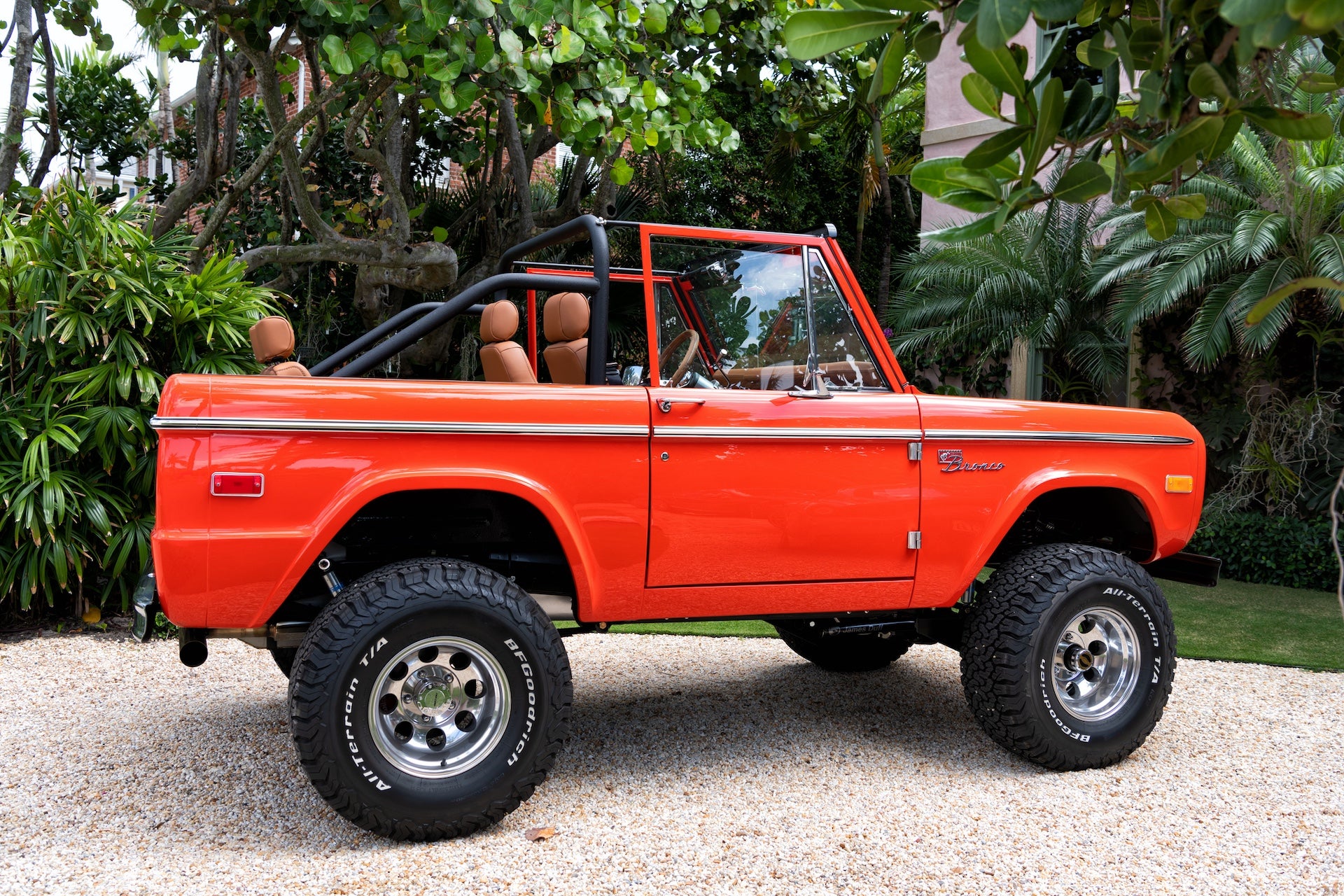
Americans have been crazy for cars since the first horseless carriage was displayed. On Car Collector Appreciation Day this July 12 th, we look at some of the most unique classic Ford trucks to date! Which ones are your favorites? 1956 Ford F-100 A wrap-around windshield with curved glass, a smooth rounded hood, and slanted A-pillars. A car with these features would look out of place today, but in 1956, Ford committed to their aesthetic, creating the later-named “Big Window” truck. Providing amazing panoramic views, the Ford F-100 was as unique as it was rare. Only 6,000 were ever made and most can often be found at shows around the US or at vintage meets, belonging to proud car collectors who are fans of bold and vintage car designs. 1966-1973 Ford Bronco Since its first generation, the Bronco was engineered for the ride and was agile on the trail with great off-road prowess that rivaled many vehicles of the decade. In the early days of the Bronco, Ford offered several different body styles. While around 225,580 Broncos were built between 1966 and 1977, none was as unique as the U13 roadster. Only 5,000 Bronco U13 roadsters were ever made, with declining numbers making this a special rare find. Broncos are often heavily modified with cut fenders, so finding an intact vehicle is equally as rare as finding a remaining Bronco U13. 1975 Ford F-150 Evolved from the F-100 and to fill the middle-of-the-line needs of those who didn’t need something as powerful as the F-250, the 1975 Ford F-150 was perfect for 9-to-5 workers who still needed a pickup truck without all the towing power of the F-250. It was extremely successful, with a third of truck sales in 1975 being taken by F-150s, filling the needs of the everyday person for the next 40+ years. The F-150 had enough power for hauling with stylish chrome finishes, two-tone color options, and internal finishes that made it incredibly comfortable. While the 1975 F-150 trucks aren’t as difficult to find as our other two favorites, it still made its mark in American classic truck history. From Car Collector Must-Haves to Contemporary Power Ford has been one of the leading pickup truck automakers from the beginning, creating models that incorporate power, luxury, and design for drivers who work hard and play harder. As we celebrate car collectors this month with their exquisite taste, we look to Ford’s current offerings of trucks that make everyday life easier and are sure to win their places in the history books of the future. At Casa Ford, we can help you find the new or pre-owned vehicle that’s right for you. Whether you’re looking at the new 2024 Ford F-150 or need a bit more power from a trim like the F-150 XLT, our team of experts is excited to help you find a Ford that fits your lifestyle from work to leisure. Visit our dealership for a test drive and take on the world in style with our powerful pickup trucks today!

Five Ford Innovations That Changed the Game

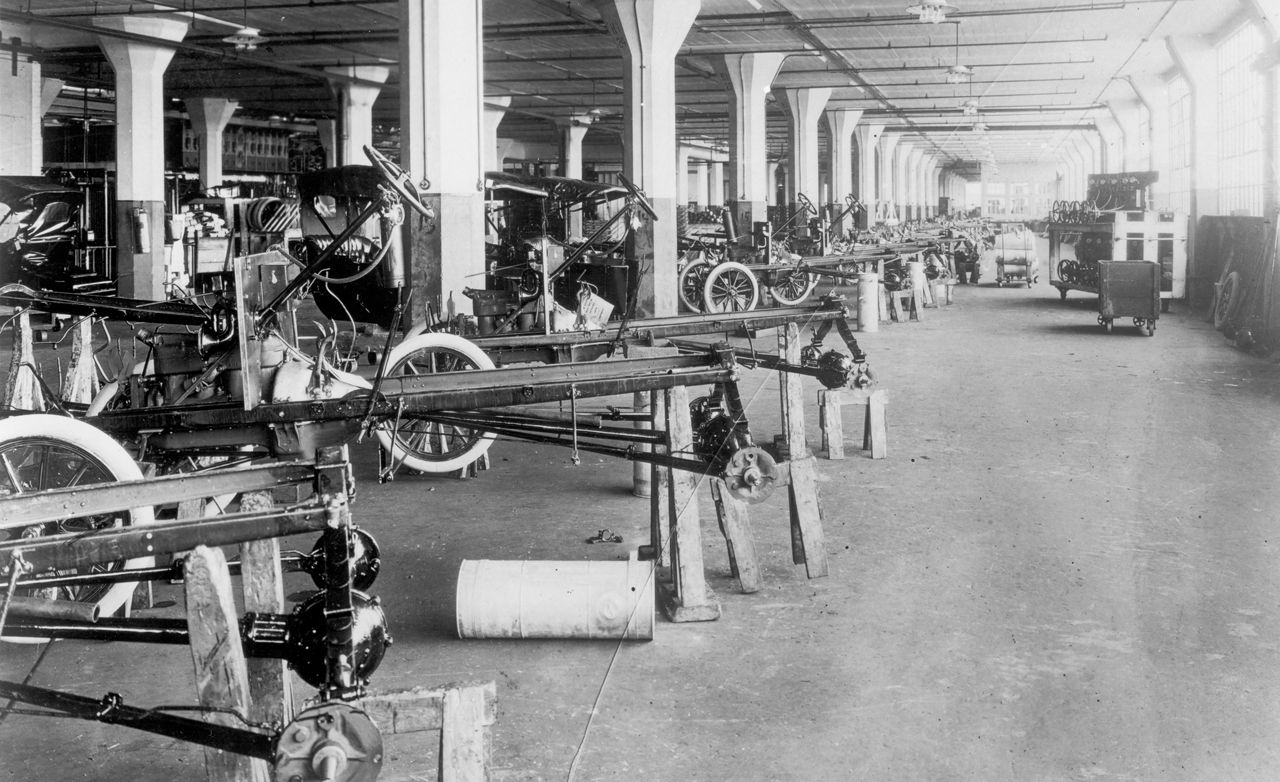
Henry Ford didn’t invent the automobile. If you've ever participated in pub trivia or looked beneath a Snapple cap, you probably know this. What Henry Ford did do was mold our modern conception of what an automobile could and should be. As the Industrial Revolution faded and left us with a new world to experiment with, the Ford Motor Company helped pave the road ahead with game-changing inventions and innovations. From establishing contemporary practices of mass production and employee benefits to introducing safe-driving features such as blind spot technology, Ford has always been at the forefront of cutting-edge thinking. Today, Casa Ford takes a closer look at five of the most consequential ways Ford has changed the landscape of the auto industry. Moving Assembly Line & Mass Production Automobile manufacturing would never be the same following Ford’s implementation of the moving assembly line. By using a conveyor belt, Ford assembly plants efficiently moved the product to the worker, rather than employees scramble around facilities. After much trial and error, the process was perfected at the Highland Park assembly plant in 1913. Soon, new Ford automobiles were being fully assembled in just 90 minutes. In addition, Ford introduced standardization, which reduced production costs and increased efficiency by utilizing standardized parts that could be shared across different models. Model T The original automotive game-changer for consumers, the Ford Model T was mass produced from 1908 to 1927. In that span, it established itself as the first mass-affordable automobile, resulting in car travel becoming available to middle-class America. Thanks to savings stemming from mass production and standardization, the average price of the Model T dropped from $780 in 1910 to $290 in 1924 – a truly staggering number, especially when adjusted for inflation. Thanks to the moving assembly line and its interchangeable parts, the Model T (also known as “the Tin Lizzie”) became the most ubiquitous vehicle in the world by an absurd margin. By the early 1920s, more than half of registered automobiles throughout the world were Fords, with over 15 million Model T’s built and sold during that span. $5 Wage / 5-Day Workweek When Henry Ford proposed in 1914 that all Ford employees be compensated at five dollars per workday, it sent a shockwave through the working community – and for good reason. Five dollars per day translates to $153 per day by today’s standards, after adjusting for inflation. That’s good for $19 an hour, well above the stagnant federal minimum wage of $7.25. Then, in 1926, Ford introduced another now-standard workplace practice with the five-day workweek. Though it was driven by the expectation that worker productivity would increase if given more leisure time, Ford also believed giving workers more time to purchase and consume goods would be good for business. The idea passed the test of time; nearly a century later, some companies are starting to explore expanding Ford’s vision and bumping the workweek down to four days. The Trimotor Plane One of the great “What If’s” in automotive history is the Ford Airplane Division, which shut down in 1933 due to the Great Depression. When Ford entered the aviation business during World War I, they introduced the Trimotor Plane, an aptly-named, three motor plane that became the United States’ first successful passenger airliner. You can’t help but wonder what Ford could have further accomplished in the aviation space if they hadn’t been forced to shutter the division in the mid-1930's. Unfortunately, in this case, the sky was literally the limit. Blind Spot Monitoring For decades, drivers changed lanes with the aid of three rear mirrors and their own intuition. That changed with the introduction of Ford’s BLIS (Blind Spot Information System). BLIS is responsible for detecting vehicles in your blind spot and alerting you to their presence. It has since paved the way for a plethora of modern collision-avoidance technology. While Volvo was technically the first manufacturer to introduce this feature to the public, Ford's 1995 concept car, the GT90, was the first vehicle fitted with modern blind spot technology. Ford unveiled its version of blind spot monitoring to a mass audience in 2009 with the 2010 Ford Fusion and Fusion Hybrid. Drive Into a New Future Ford's innovative nature hasn't diminished; currently, it's focused on expanding the reach of EV technology. With plans to put over 40 EVs and hybrid models on the road within the next few years, Ford’s next step is the complete electrification of its fleet. You can get in on the EV action early when you shop at Casa Ford. Explore the Mustang Mach-E, an electric SUV with an EPA-estimated range of 310 miles. Or dig in to the electrified version of the F-150, the Ford F-150 Lightning. That said, no need to worry if you're still committed to your gas-powered Ford. Our Service Department is here to handle your oil filter replacement, brake repair, and whatever else you need to drive into a bright, boundless future.

Contact Us

Fill out this form below and we'll contact you shortly
*Required Fields